Showing posts with label Hand Drill. Show all posts

Tuesday, February 10, 2015

Rust Hunting in Georgia 2014.04.12

It's been a while since I've posted - it's also been fairly slim pickings lately. This is a roundup of several months culminating in April of 2014.


Most of the items above I found at an estate sale - it was highly advertized and there were many people picking over the large hand tool collection. As usual I went for the less popular, less expensive items. Of particular note are these two routers - the mini I got for $5 and the larger (which is a nicely done patter-maker's router - no idea what I'll do with it as it's huge) was $25. Everything was also discounted about 40% so it was all fairly cheap. I've been looking for a Stanley corner brace for a while and this one works fine.


The handsaw is interesting in the way the nuts bind (they protrude and are quite sturdy - also the reinforcing plate). About $5 at Goodwill of all places.


And finally this trio of planes - two knuckles and one rabbit mouth (no cracks on the latter).


That's it for this installment. With my current work load I'm just not getting out as much as before. I hope to remedy that this year.

-- John

Wednesday, October 10, 2012

Rust Hunting in Georgia 2012.10.06

I had only found a couple of items between my last post and this past Saturday:


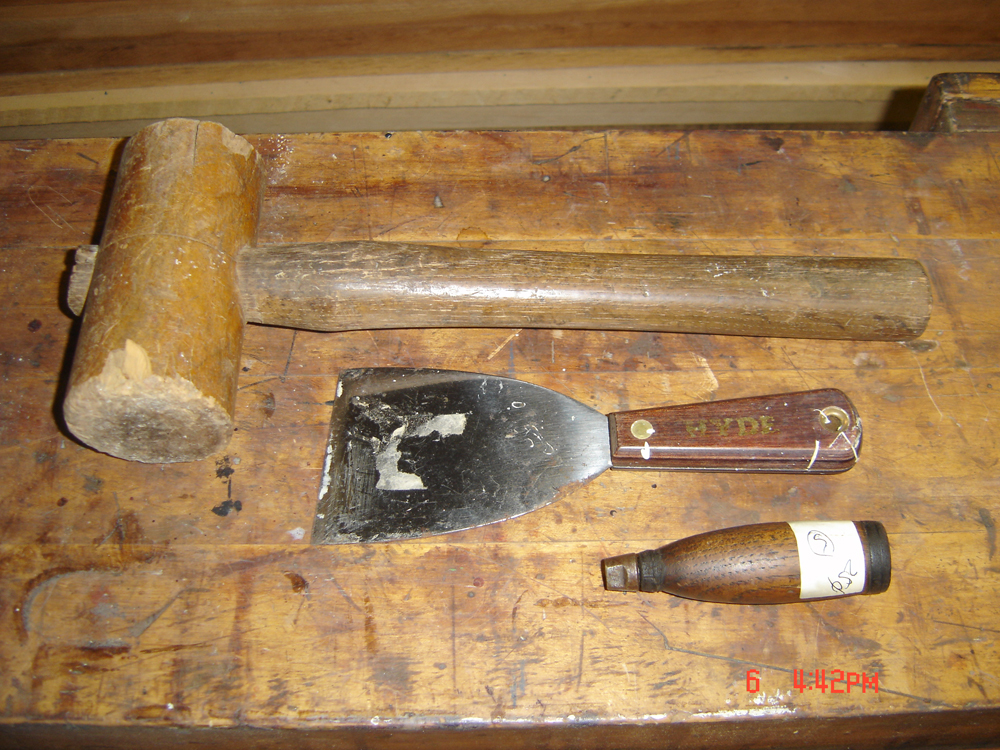
I think I've got less than $2 in the three items above - the mallet is made of oak and quite stout. I also look for wood handled putty knives and scrapers - some of the earlier examples that I've found have rosewood handles (this one is more modern in vintage - I bought it as a user). The small file holder - that's about 3 or 4 of those I've found over the years. You can place an awl (or make one from a nail) or small file into it - very useful. The end is padded so it's ideal for small, homemade chisels (if you've ever done any micro carving in hardwood you'll know what I mean).

This second lot I found over the weekend - I was leaving for my woodworking club meeting (The Gwinnett Woodworkers Association: www.gwinnettwoodworkers.com - if you're ever in Atlanta early Saturday come on by, we meet at Peachtree Woodworking Supply. I also edit and upload class videos to our YouTube channel if you'd like to see what the meetings are like: http://www.youtube.com/user/gwinnettwoodworkers) when I spotted a yard sale sign. I turned around figuring I had a few minutes. The neighbor had a pile of rusty tools on a table to the rear. He told me that they had belonged to his grandfather and had been kicking around for many years getting rusted up, and it was time to get rid of them. I won't tell you how much I paid, suffice to say we both walked away happy.


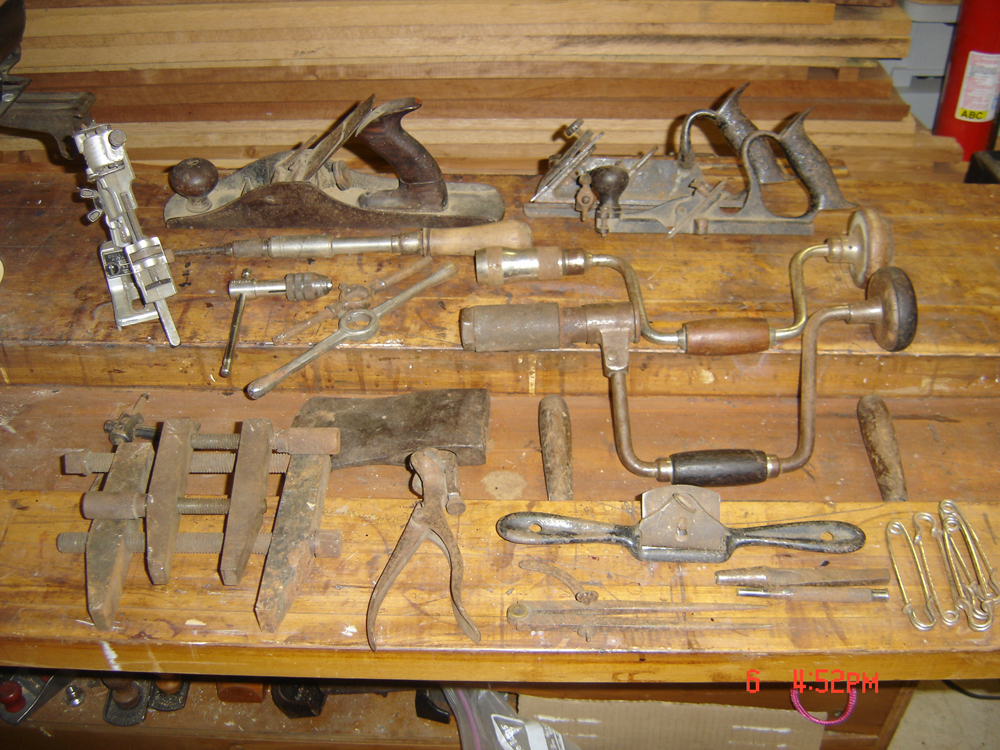
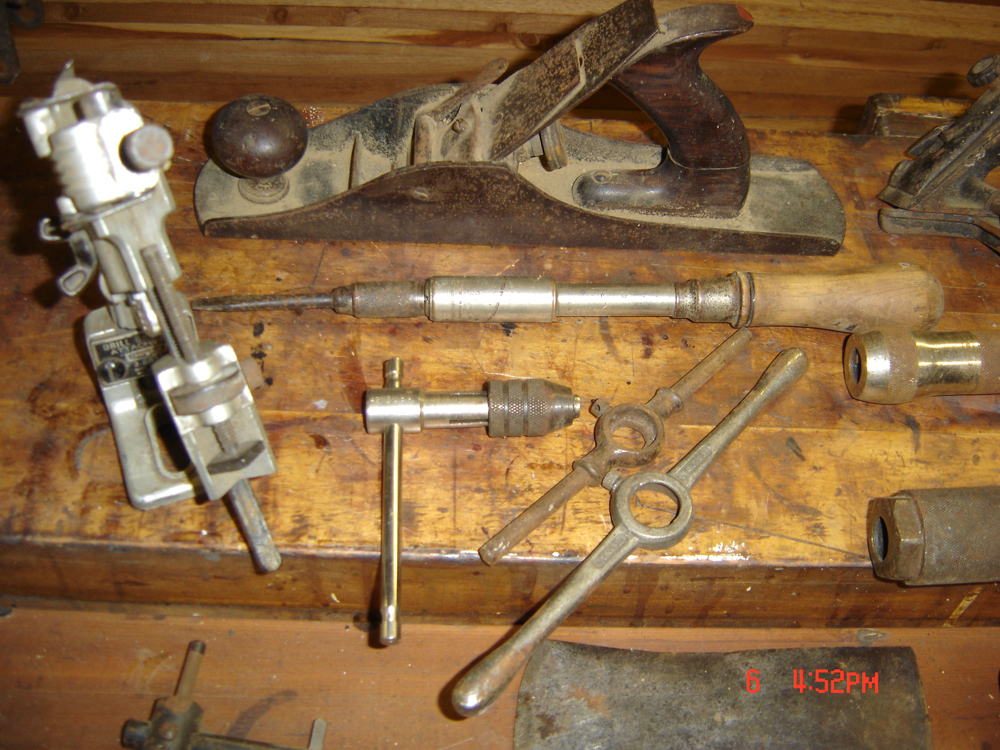
Included were two intact planes - one about a Number 5 size and a Number 48 match plane missing the swinging fence on the bottom. Also in the photo below are some parts for a tap-and-die set, a Yankee screwdriver and a drill-bit sharpening attachment for a grinder.


Here are the two all metal planes:


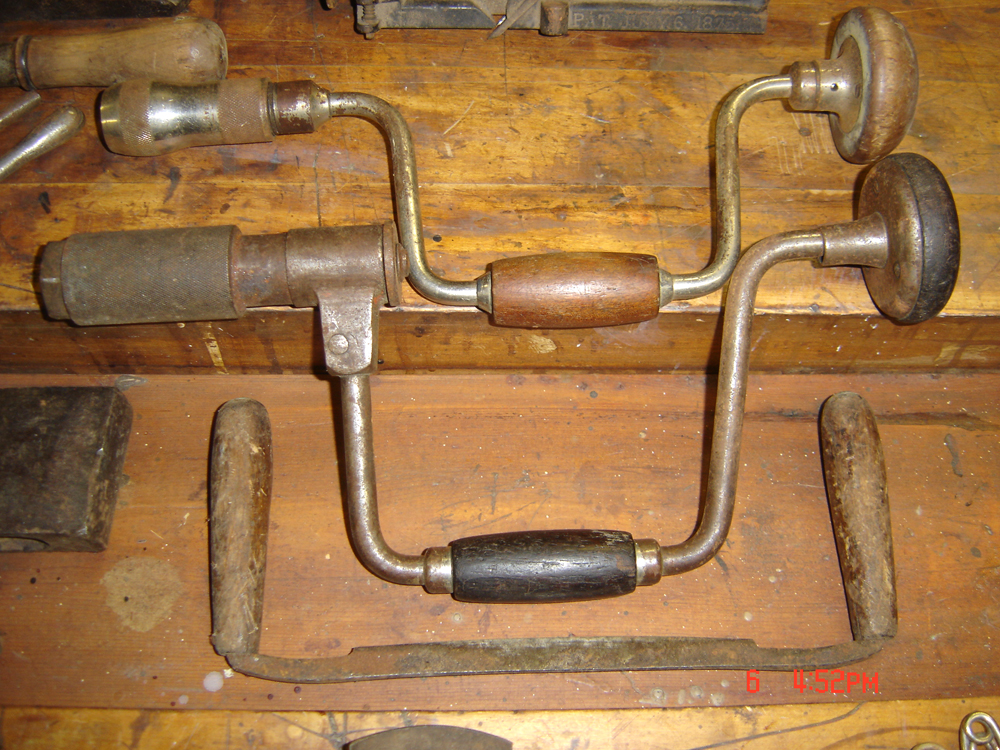
Also included were these two braces and a super-thin draw knife. Note the rosewood pad and handle on the larger brace. I couldn't find a manufacturer but the chuck is massive and I'm sure it's very old.


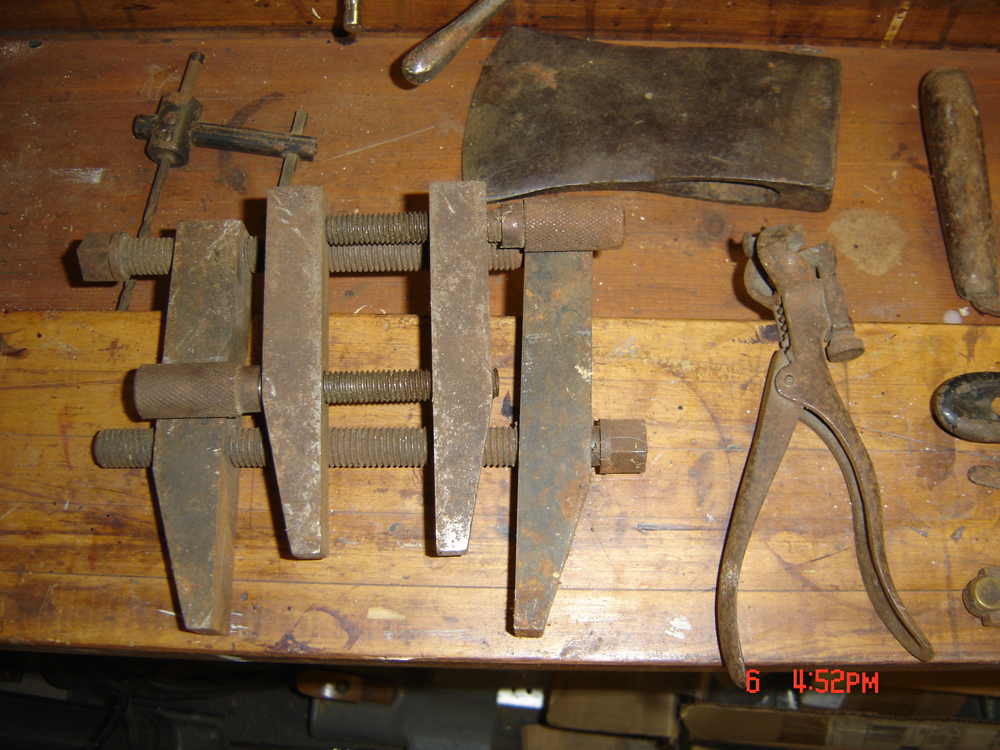
There was also an axe head, a circle bit, a saw set and a couple of large machinist clamps...


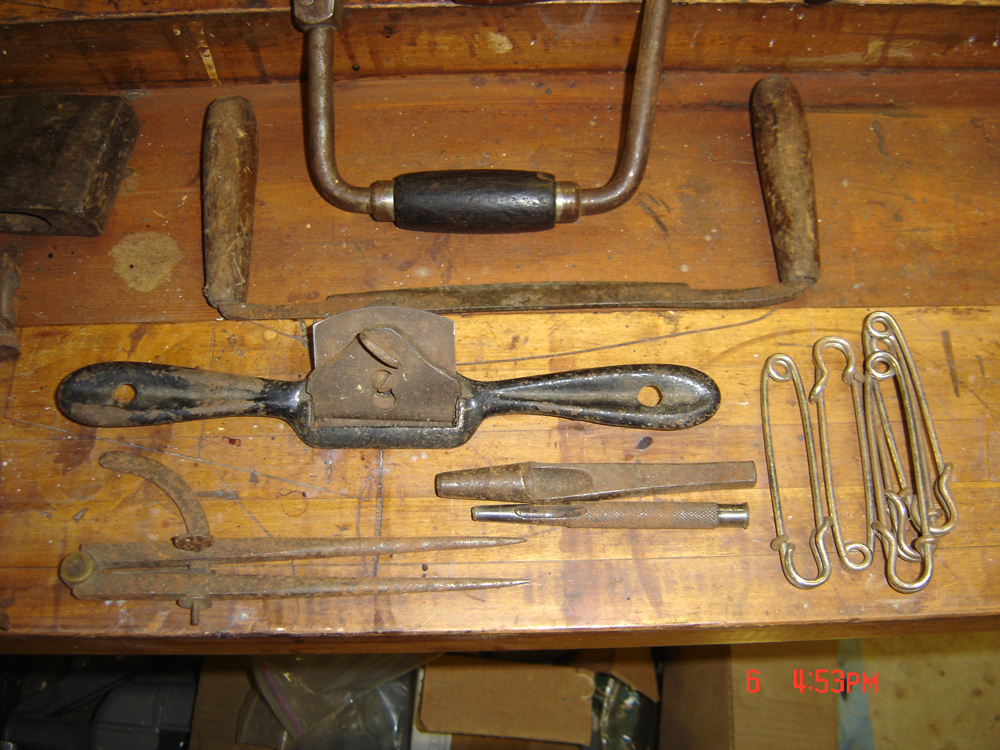
And finally a spokeshave (probably Stanley - that's what's on the cutter), a divider, couple of punches and some large safety pins (thinking these are for canvass).


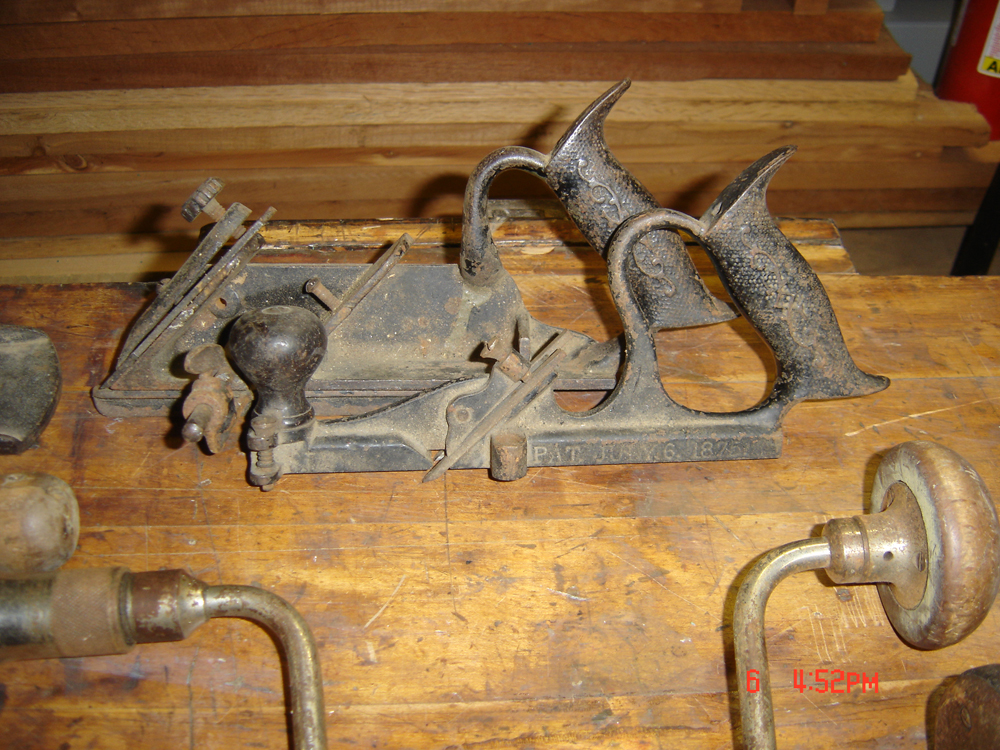
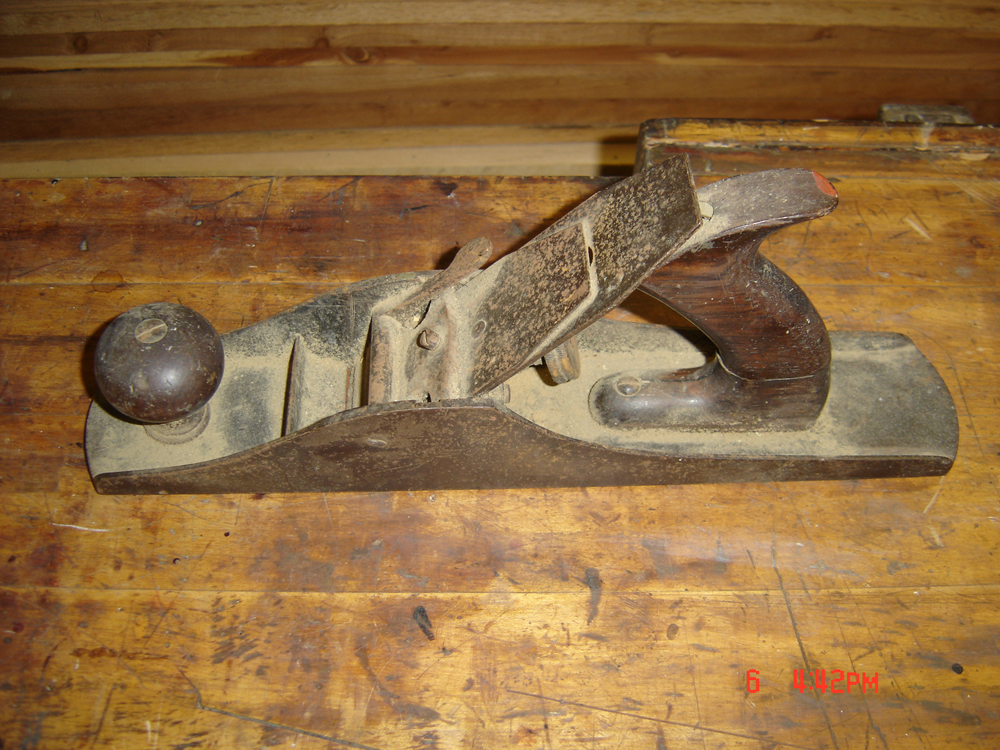
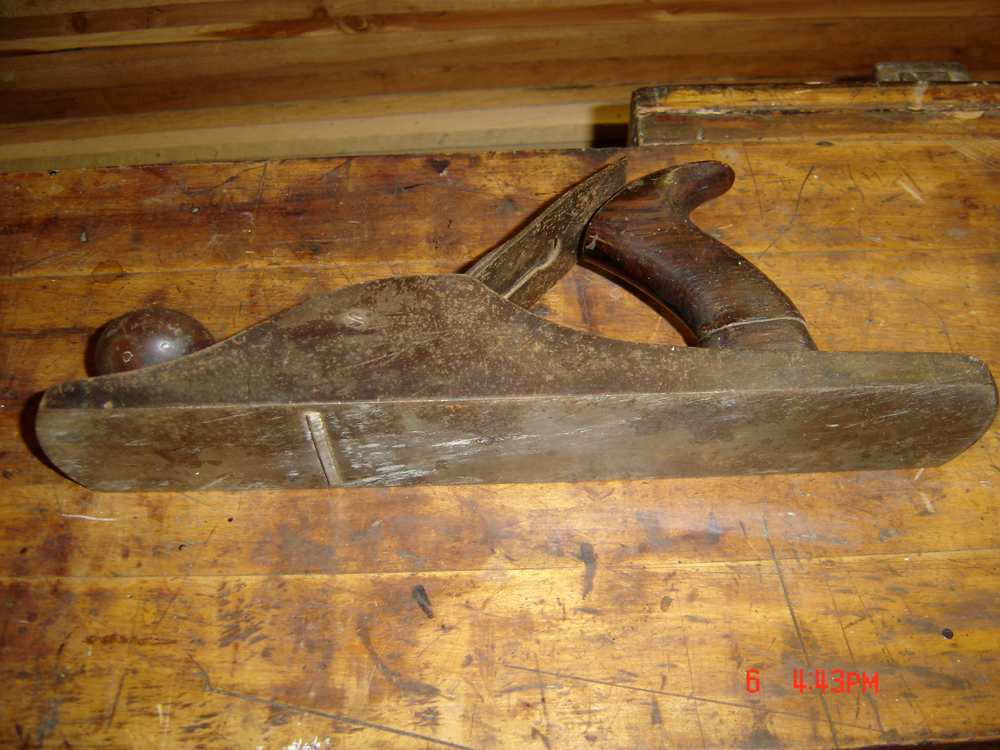
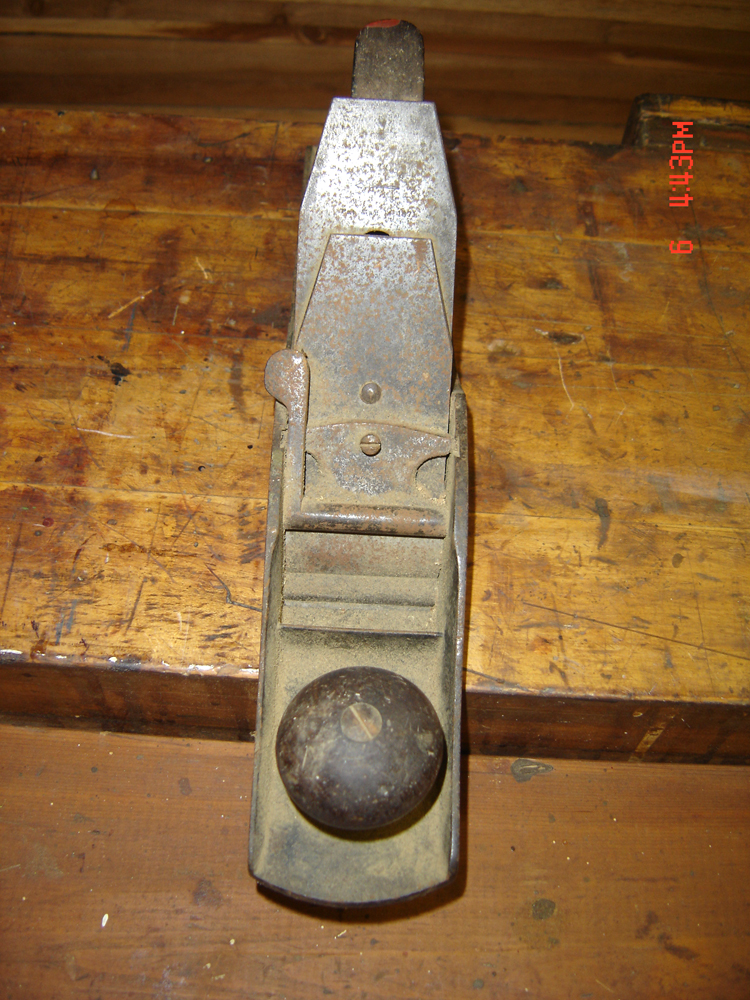
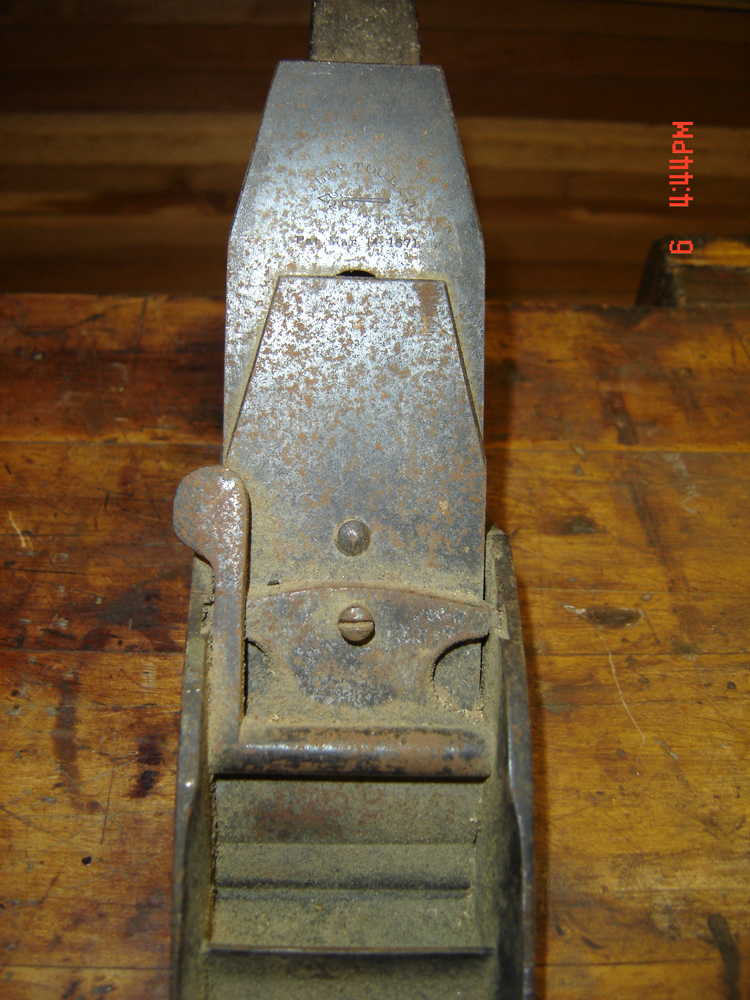
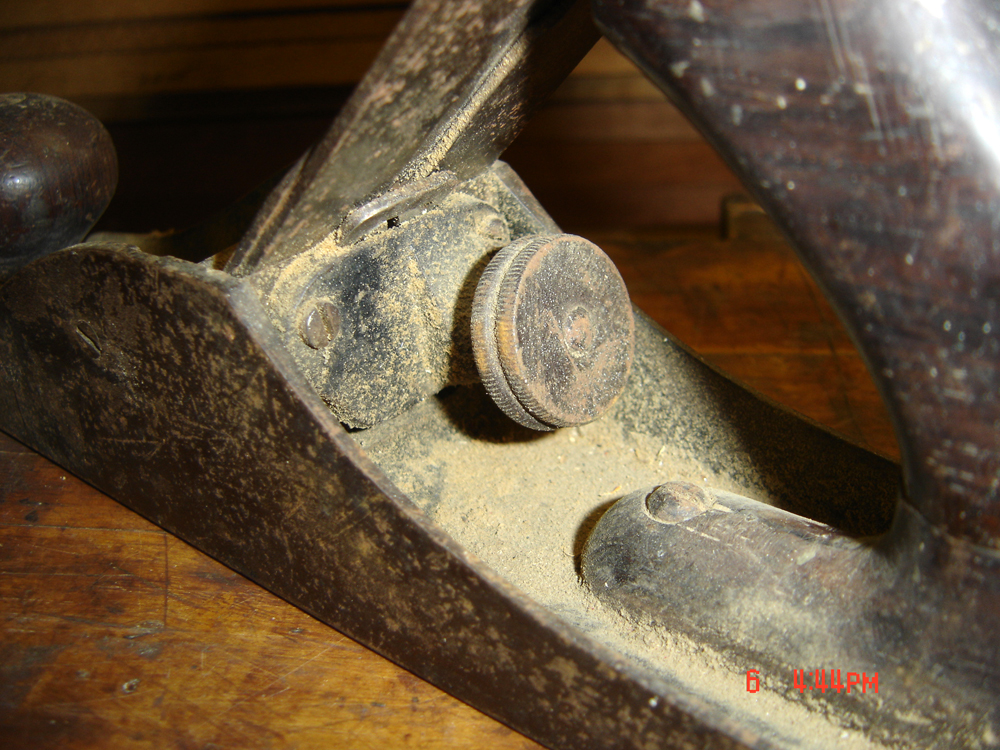
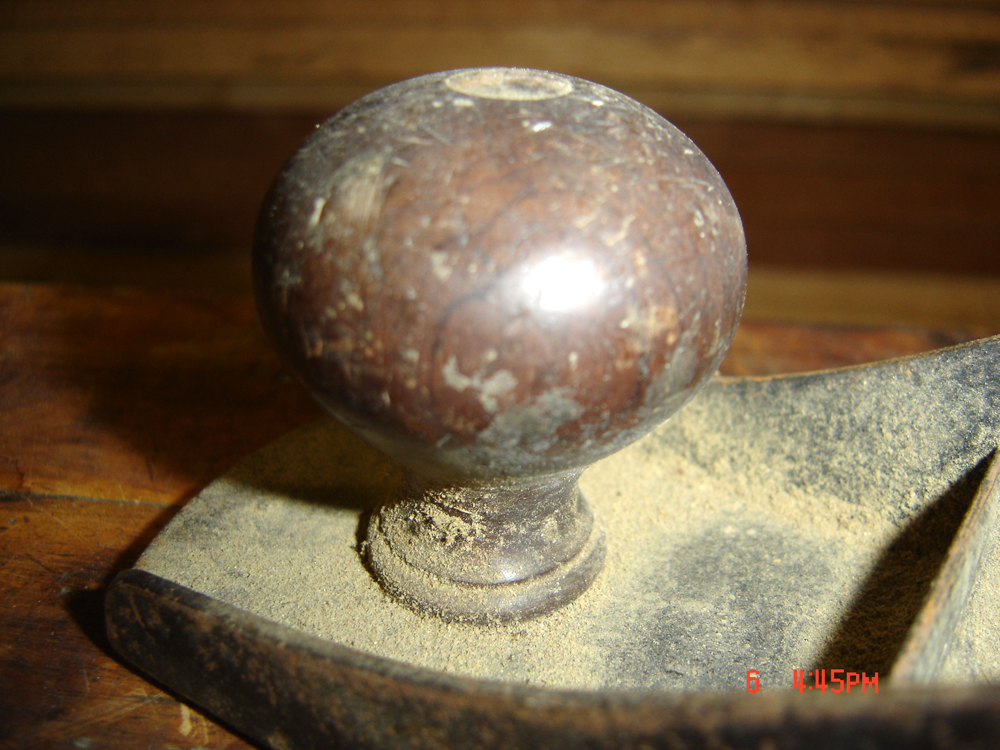
The best thing of course was the hand plane. I couldn't see any markings until I got home - It's marked Bailey Tool Co with an 1871 patent date on the blade and features a cam-lock mechanism. Quite old I think, with rosewood tote and knob:


Love the balloon knob and the blade raiser is very interesting. I tried to do some research on it but wasn't able to find out much - no photos at all except for a rendering on the patent. I'll clean it up a bit and post more about it in another post.

-- John

Friday, August 12, 2011

Rust Hunting in Georgia - July 24, 2011

I realized today that I hadn't posted about my latest finds - and further that it had been a few weeks. As I've mentioned previously, the new job has most of my attention - it's going quite well. I originally was hired on a 6 month contract but they gave me an offer 2 weeks in, so starting the third week I became a regular, salaried employee. In any case, these are the tools I picked up the weekend of July 24th. I stopped at two sales (actually one estate sale and then my friend John once again called me about some files he saw at one of our favorite junk stores - managed to find a couple of other things there as well).


I'm pretty much a sucker for packaged old items - these files (mostly unused) are a good example. One of the boxes had a single file and some have some surface rust - however I'm still glad to have them.


Also found was this Irwin adjustable auger that had an extra vinyl wrapped auger with it - the latter had extra blades.


As seen in this photo:


I also picked up that Stanley "D" chisel that's not too bad. The Estwing mason's hammer was bought for a buck at the second sale.


As were the Stanley "Yankee" style screwdriver and the Snap-On wrench. I also picked up the nice drop-light, as the plastic versions I own always melt around the bulb - this one is heavy-duty.


Love these file boxes (I guess that officially makes me a "collector") - and here's some close-ups of the other tools:


This is the first metal handled square I've actually purchased, as I prefer wood-handles, especially rosewood, but I figured this one will still come in handy in the shop and will live near my drill-press.


That wraps up the week of the 24th - I picked up some amazing items just this past weekend - those photos soon.

-- John

Monday, March 15, 2010

Drills and Drivers, Screws and Screwdrivers

I got to thinking about this last night - yesterday I was driving some Phillips head screws using an impact driver - if you haven't had a chance to use one then you don't know what you're missing. I was at a friend's shop when I spotted his Makita driver and asked him about it - wanting to demonstrate, he quickly grabbed the driver and a 4" decking screw, threw a 1" board on top of a 4x4 chunk of pressure treated and drove the screw in just a few seconds, without stopping or doing short bursts (which is what i usually do) - the screw went in like butter. The difference is the super short ratcheting that the impact driver supplies (just like an pneumatic impact wrench) - the clutch for the ratcheting doesn't kick in until the drive feels resistance - then it ups the torque value exponentially (my own Dewalt driver delivers 2700 lbs of torque according to specs). The result is that the screw drives very smoothly and the tip doesn't strip (at least it doesn't if the tip is 'fresh'). Other advantages of these impact drivers: they're lightweight (not needing the other functions of a drill they don't have multiple clutches or mechanisms for drill, hammer, clutch, etc); they have shorter barrels so your hand is closer to the work and they fit in smaller spaces; they have a built in light that shines on what you're driving (many newer screw-guns and drills now have this feature as well). Disadvantages include: you're more apt to break a screw off in your work (extreme torque can work both ways); one can't use these to drill holes very well (the chuck is a locking type for a hex-shaped shaft, that doesn't include any type of Jacobs style gripping action for round drill bits); non-impact bits pretty much disintegrate with use.

Another reason I thought of all this has to do with my having to remove some hinges and latches from some old cabinet doors - these doors had about upteen coats of paint on them so it was quite a task - it was also away from my shop so I was wishing I had a brace with me. Why a brace? One sort of forgotten advantage of the brace is for the amount of torque that can be applied to a slotted screw using a flat-tip screw brace bit. Using a large brace (12" swing), plus with the amount of pressure you can exert on the pad, you can worry off just about any slotted screw - which is what these old hinges had under all the paint. As it was I managed to remove them all but it took much more time than it normally would have had a brace and flat-tip bit been involved.

So last night the thoughts of the day ran through my head and I started thinking about drivers and screws - this naturally (at least for me) got me thinking about different types of screw head-types and what I knew about the flat tip, Phillips and square drive. So this is what I knew (through anecdote, discussion, etc):

  1. The square drive and screw was actually patented by a Canadian named Robertson – thus it’s called the Robertson drive in Canada and it’s ubiquitous in use north of our borders – this drive actually pre-dates the Phillips drive and screw in the US.
  2. The Phillips drive and screw was invented by someone in the US who sold the rights to a company who marketed it under the Phillips name. Initially there wasn’t a good way to manufacture the screw heard (and there are variations with up to 6 or 8 vanes/slots) so the patent pre-dates the actual manufacture by some years. I had also heard that the Phillips bit was developed for the manufacture of airplanes (something to do with the attachment of the aluminum skin – the recessed head discouraged drag and the shape of the slots allowed for the head to “cam out” rather than the screw being over-torqued and the threads being stripped).
  3. According to what I’ve heard, the Phillips screw and drive owes its use in the US to Henry Ford, who wanted to use a product in his vehicles that was patented and owned by a US company rather than one outside our borders.
  4. It’s obvious in retrospect that the Phillips drive is inferior to the Robertson’s drive due to the built-in design (the desire to cam out instead of stripping). Strange that it’s used on everything and has pretty much replaced the slotted screw and driver – well it is easier to register and use than a slotted fastener. But why has it taken so long for the Robertson drive to gain popularity among US users? I first saw the Robertson screw being used by outdoor deck builders – makes sense as the drive head doesn’t strip – the worst thing about a stripped head when building decks is that it takes off the coating that prevents rust – once the head starts to go the coating causes rusty spots that are very un-slightly, in a very short time.
So what of the above is true and what isn’t? Doing a little research it appears that these same stories are found and accepted all over the web. A bit more research will be needed before anything conclusive can be ascertained – however one thing is indeed certain – the Phillips drive and bit for most woodworking is indeed inferior for many reasons.

Next topic: the Monkey Wrench!

-- John

Sunday, March 23, 2008

Latest Acquisitions 2008.03.23

Thought I would take a moment to describe the latest in old 'arn that I've gotten over the last few months.


First up is this 24" Rockwell Scroll Saw Model 40-440 Serial Number FP-1467. This was from a Craigslist ad listed for $75 - reduced to $65 because the seller couldn't find the insert (ended up buying one from an OWWM member for $8). I'm not showing the stand, but it was also included - typical Walker Turner/Delta/Rockwell with splayed feet and square bolts. This example also comes with the cast belt cover but not the light (one could only wish - those are going for crazy money these days). It also has a magnetic switch installed so it was probably used in some production environment (guessing there). Very nice Delta/Rockwell motor with knurl for hand turning.


I've been looking for a while for a cast iron stand for the 6" Delta Joiner (see earlier post) and finally found one - in this case with a working joiner attached! The joiner is missing some parts and has some slop, but does have the coveted porkchop guard - I may end up parting the joiner and concentrating on the earlier one I purchased. This stand is fairly complete (has both back covers and 2 knurl knobs). I haven't removed the motor but it's a beast and probably better than the one I got with my other 6" joiner.


Next up are a couple of old hand-drills. The 5/8" Van Dorn I ended up getting while picking up a Rockwell Radial Drill Press (I'll have pics up in a later post - forgot to take them). Got it for $25 - it's slow but has tremendous torque.


I picked up these two hand drills at to separate yard sales for a couple of bucks a piece - both are Craftsman - the one on the left is the better of the two and has replaceable bushings.


Found this Franklin Electric motor converted to a single disc grinder. It was $5 and I figured I could use it for something.


I spotted an ad for a few misc. 3 phase motors and in the middle was one listed as a "driver" so I took a chance that it was a Walker Turner - turned out I was right. It also came with the reversing switch - I'm not sure what it was used for - at first I thought a shaper but at 1/3 HP probably not. Not bad for $10.


That's it for this post - I still need to take some pics of the Rockwell Radial Drill Press I picked up, as well as a Sears Dunlap 8" table saw. I'll have those posted soon.

-- John